


Local authorities, technology suppliers and passenger representatives have set out their priorities for Government to help turn transport innovation into better journeys, calling for dedicated funding, clearer national direction and a focus on the people using services.
Speaking at a special UK-ERTICO – ITS Europe event at the Transport Technology Forum Autumn Update in central Birmingham, contributors agreed that technology should deliver practical improvements to everyday travel. But their contributions highlighted different views on how quickly progress can be achieved and what support is needed.
Delegates heard the view that, for councils, delivering better services means overcoming ageing infrastructure, constrained budgets and complicated procurement.
Suppliers want a more coordinated approach to investment and innovation, while passenger representatives stressed that success must be judged by reliability and accessibility.
The discussion reflected the TTF’s role in bringing the sector together, providing an opportunity for Government to hear views and take on feedback from local authorities and the supply chain, alongside explaining its own priorities.
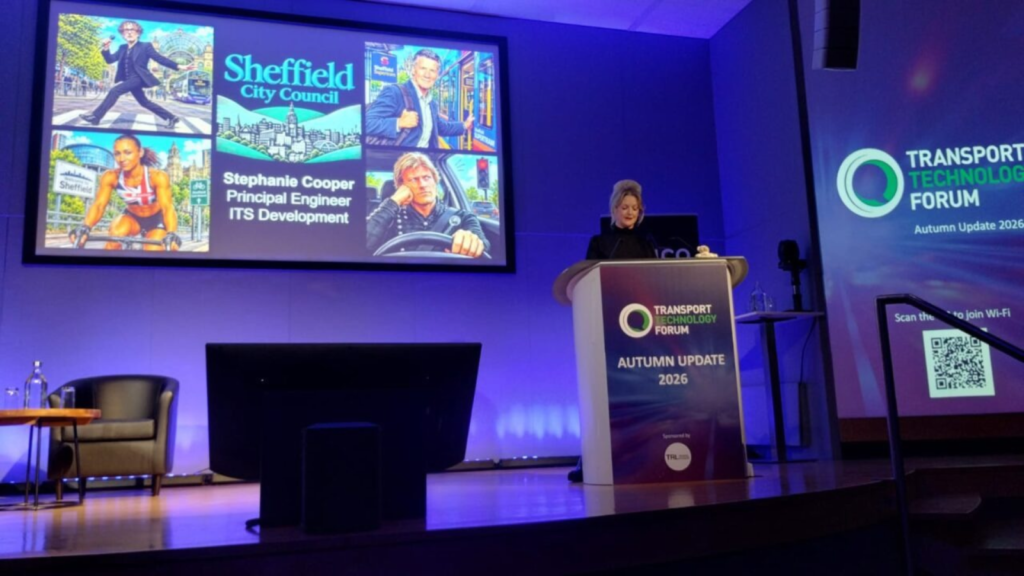
Principal Engineer at Sheffield City Council, Stephanie Cooper (pictured), called for stronger central government support to help authorities modernise their networks.
She explained that like-for-like replacement under Sheffield’s maintenance arrangements could leave functioning but obsolete infrastructure in place. Securing funding for improvements through public transport and active travel programmes could also be difficult when the wider benefits of traffic signal technology were not understood.
“We need the capital to innovate, but also the revenue to keep those systems going,” said Ms Cooper (pictured). “We need evaluation processes that acknowledge the specific benefits of ITS.”
She called for a dedicated funding stream, clearer government messaging and a national ITS procurement framework that would allow councils to spend more time delivering projects and less time navigating administrative barriers.
Better roadside communications and power, shared data and investment in digital skills were also priorities. Ms Cooper described a future of integrated journeys, public transport priority and digital twins helping operators anticipate problems, but said basic integration still needed attention.
“When we get into our control room in the morning, we don’t want to open six systems to begin dealing with the morning peak, so we need interoperability,” she said.
Managing Director of SWARCO UK and Ireland, John Pickworth, said suppliers had a role in connecting national ambitions with the practical needs of local authorities.
He warned that fragmented strategies left authorities and their partners making separate decisions about which technologies to adopt, when to invest and where funding would come from.
“But the UK at the moment is really quite fragmented in that way,” said Mr Pickworth. “Basically each local authority or authority with their partners has to come up with their own plan.”
He called for a common direction that would connect emerging technologies with the needs of network operators, helping avoid multiple variations of solutions that failed to support wider national goals.
Mr Pickworth also highlighted cybersecurity as a growing challenge, warning that protecting legacy equipment required investment alongside the development of new services.
Trustee Director at Bus Users, Laura Creaven, urged the sector to judge improvements through passengers’ experiences, including those who were less confident using technology.
“They want the journey to be easy, reliable, accessible, and stress-free,” said Ms Creaven.
Drawing on the organisation’s work handling complaints from bus and coach passengers, she said users were primarily concerned about whether services would turn up. Her challenge was to identify quick improvements that would make everyday journeys more dependable, accessible and easier to navigate.
The Government’s contribution emphasised the need to move beyond pilots and demonstrations towards practical delivery, supported by open data, common standards and systems that work across geographical boundaries.
While there was agreement on the need for better journeys, the discussion exposed a tension between the ambition to deliver quickly and the funding, infrastructure and organisational changes needed to make that possible.
Those conversations will continue on an international stage when the ITS World Congress comes to Birmingham’s NEC from 25–29 October 2027. Bringing together governments, local authorities, businesses and transport experts, its discussions, exhibition and live demonstrations will offer opportunities to share solutions and build partnerships that turn innovation into everyday improvements. Find out how to get involved at the Congress website.
(Picture – TTF)