


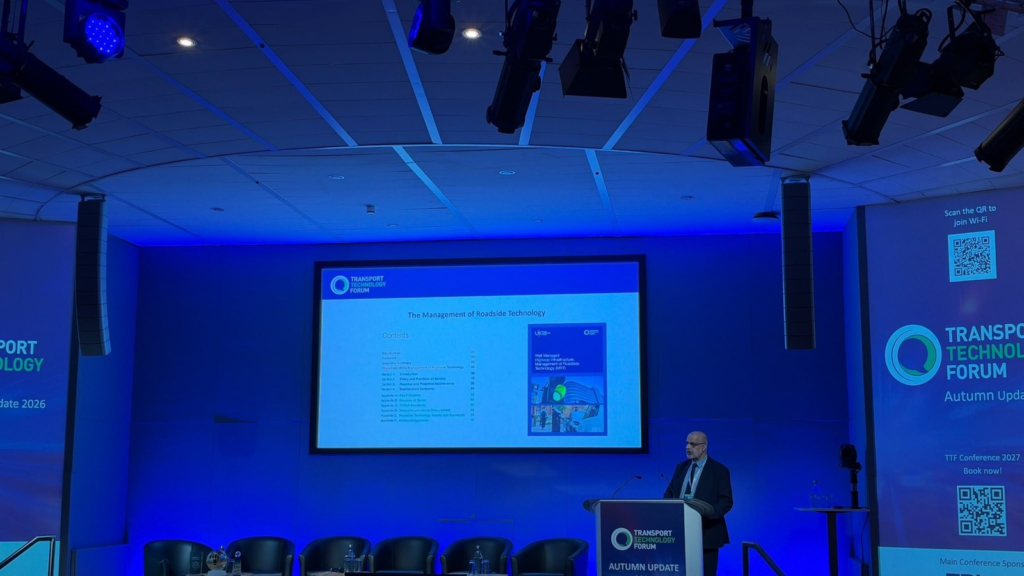
New guidance to help local highway authorities manage and maintain roadside technology has been launched at the Transport Technology Forum’s Autumn Update.
The Well Managed Highway Infrastructure: Management of Roadside Technology document was introduced by project leads Steve George and Gafoor Din, following a comprehensive rewrite of guidance first published in 2011.
The publication updates the Management of Electronic Traffic Equipment Code of Practice to reflect the growing range of technology installed on local roads and the operational demands placed on authorities responsible for maintaining it.
Leading ITS consultant Steve George and Warwickshire County Council’s Service Manager for Traffic Control and Information Systems, Gafoor Din, have led the work, drawing on expertise from local authorities and the supply chain. The TTF supported the project, which included a call for editorial group members and a wider consultation on the draft.
“Roadside technology has changed enormously since the previous code was published, and authorities need guidance which reflects the equipment they manage today and the decisions they face,” said Steve George. “Our aim has been to bring practical experience together in one accessible resource, helping those responsible for these assets plan their maintenance, prioritise investment and make effective use of the funding available.”
The updated guidance reflects a roadside technology landscape which now includes connected vehicle services, artificial intelligence, EV charging and increasingly sophisticated communications networks. It references services such as in-vehicle message signs and traffic signal priority for emergency vehicles, while recommending that authorities adopt standardised digital traffic signal information through DCIS, the Digital Controller Interface Specification.
A dedicated section addresses the management of EV charging infrastructure throughout its working life, including accessibility, software support and maintenance responsibilities. The document also considers newer mobile and satellite communications, automated fault reporting and predictive maintenance, while stressing the importance of cybersecurity, human oversight of emerging technologies and ensuring roadside systems remain safe if communications fail.
The guidance also covers established equipment including traffic signals, pedestrian crossings, message signs and detection systems, alongside newer infrastructure such as electric vehicle charging and connected vehicle technology.
The review also identified data management and security, digital traffic regulation orders, the Digital Controller Interface Standard, low emission zone systems and procurement as areas requiring updated coverage. The document is intended to complement the wider Well Managed Highway Infrastructure guidance and form part of the expanded Manual for Smart Streets.
“Installing technology is only part of the task: authorities also need to be able to operate, maintain and renew it effectively throughout its working life,” added Gafoor Din. “This updated guidance gives them practical support in doing that. By bringing together the knowledge of local authorities and technology specialists, it can help councils make informed decisions and get lasting value from their investment.”
The project was developed against a background of differing approaches and resources across local authorities, with some running rolling equipment replacement programmes and others having no refurbishment programme in place. Its purpose is to support effective maintenance and operational practices across those different circumstances.
UK roadside technology will also be showcased to an international audience at next year’s ITS World Congress, taking place at Birmingham’s NEC from 25–29 October 2027. The event will bring together authorities, suppliers and transport specialists from around the world, giving the UK highways sector an opportunity to demonstrate how technology is being deployed, operated and maintained to deliver safer, more efficient journeys.
(Image – TTF)