


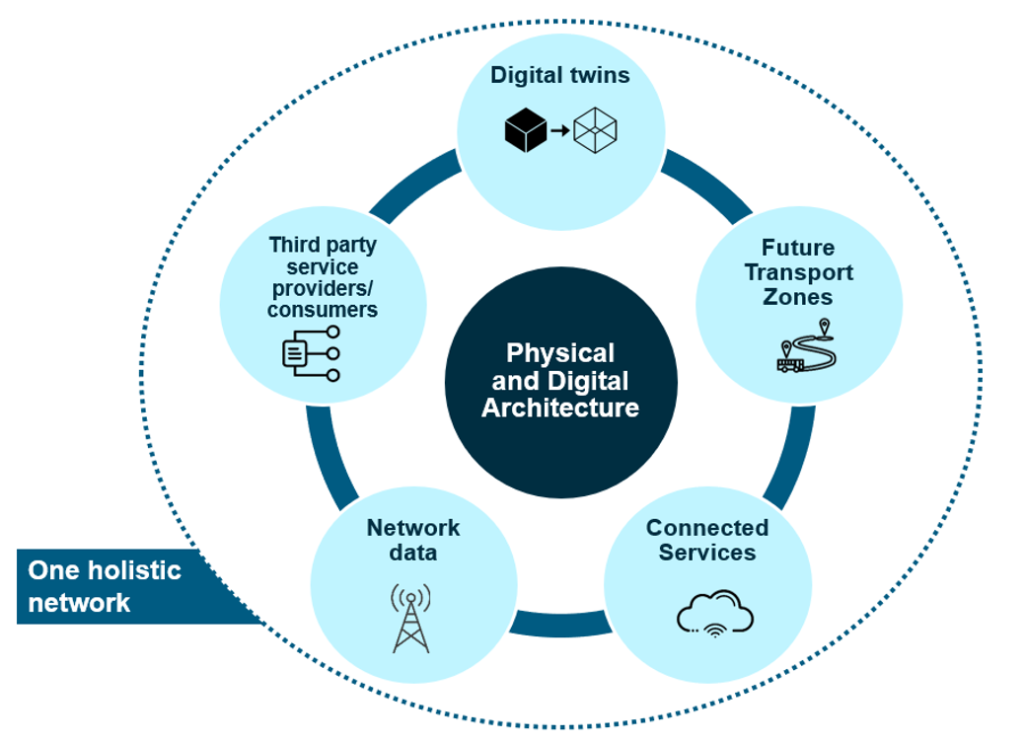
The Transport Technology Forum, working with WSP for the Department for Transport have launched a survey to understand the take-up of connected vehicle services in the UK.
The DfT says it has has identified a slow take up of CV Services as a “missed opportunity” when compared to other countries. It says this has resulted in this piece of work whereby DfT is trying to understand the current Connected Vehicle landscape from a wide variety of stakeholders in the ecosystem and what DfT should be doing to stimulate the market and form a strong foundation for delivering Connected Vehicle Services on a national scale.
Connected Services use wireless technologies (e.g. 4G/5G, Wi-Fi, etc.) to enable real-time sharing of data between vehicles (and other modes of transport), transport infrastructure, and third-party service providers. Initial analysis has shown that the establishment of an agreed set of standards, enabling legislation, governance procedures and core infrastructure components are required to create a stable environment within which institutions and commercial providers can develop products and services.
The DfT says that looking to countries who have successfully rolled out such services on mass, it can be seen that by providing guidance, and if necessary, legislation around a Connected Services Architecture , it is more likely to encourage large scale participation and crucially that when services are being delivered, there will be less risk of fragmented delivery. It is possible that allowing the market free reign could contribute to increased driver distraction due to multiple interfaces, fundamentally limit interoperability (which in this context represents the seamless transition of Connected Services for vehicles travelling from local, to national, to non-UK roads), and create segmented provision with limited access to the wider transport customer base.
Within this ecosystem, considering 97% of all UK roads are ‘local’ roads, Local Highway Authorities have a major role to play in ensuring its success. There is a need for Local Highway Authorities to understand the opportunities, associated challenges, and consequences of near-future mass delivery of Connected Services, given the impact they will have on their road networks.
It says this early engagement with DfT will help ensure national alignment, while aiding Local Highway Authorities to develop policies, funding decisions, and realise already proven key policy driven benefits such as increased safety, reduced congestion, reduced environmental impacts and lower infrastructure costs.
(Picture – TTF/WSP/DfT)